Your models and experiments.In one place.
Keep model details, versions, training runs, and evaluation results organized in UIGraph, so your team can review the work behind each model.
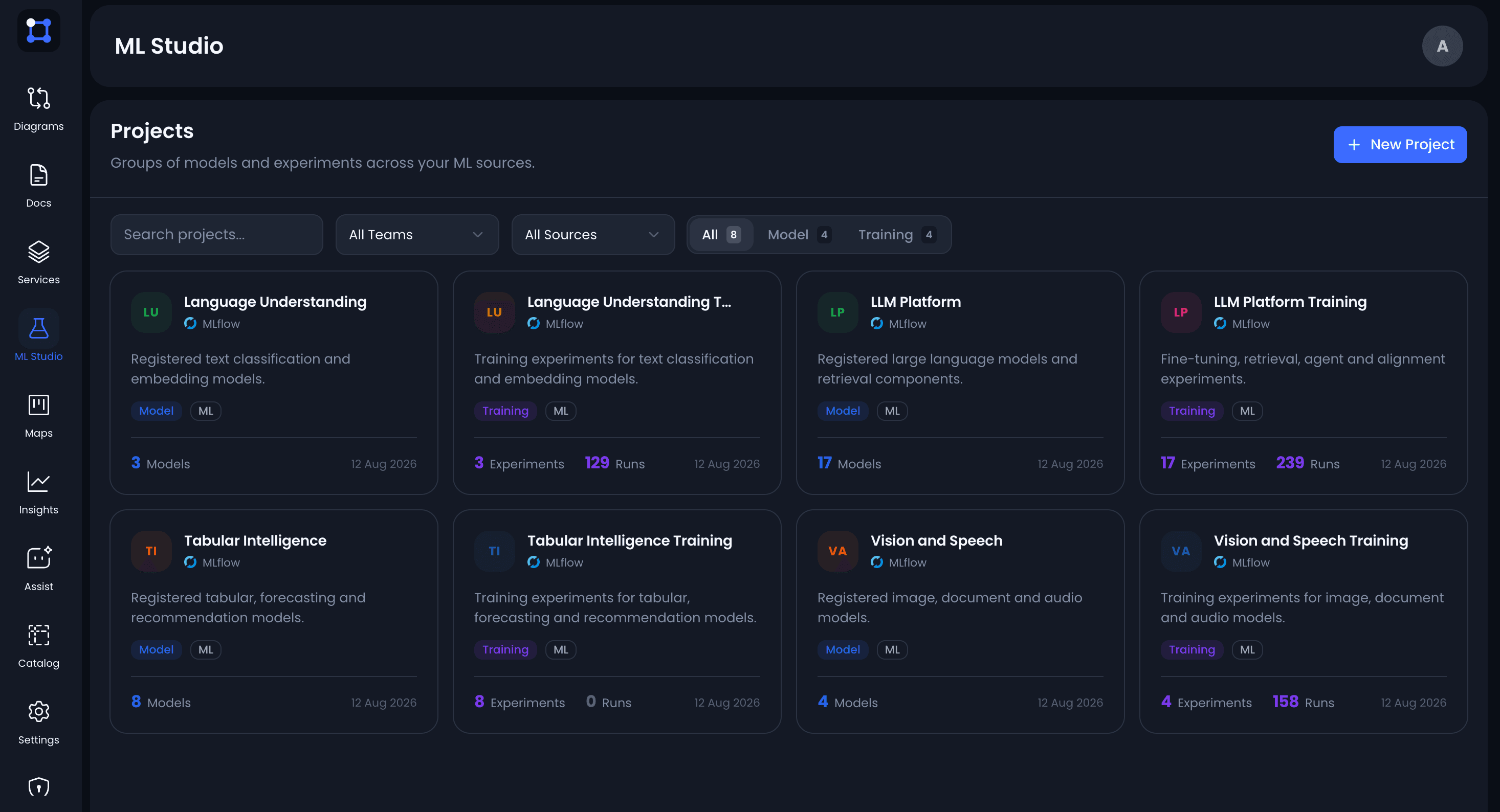
Every project, one place. Models and training experiments grouped by team, synced straight from MLflow.
Explore the details
behind each model.
Describe what a model does and its limitations. Keep its versions, training runs, and evaluation findings together so your team can review them.
Experiments and runs
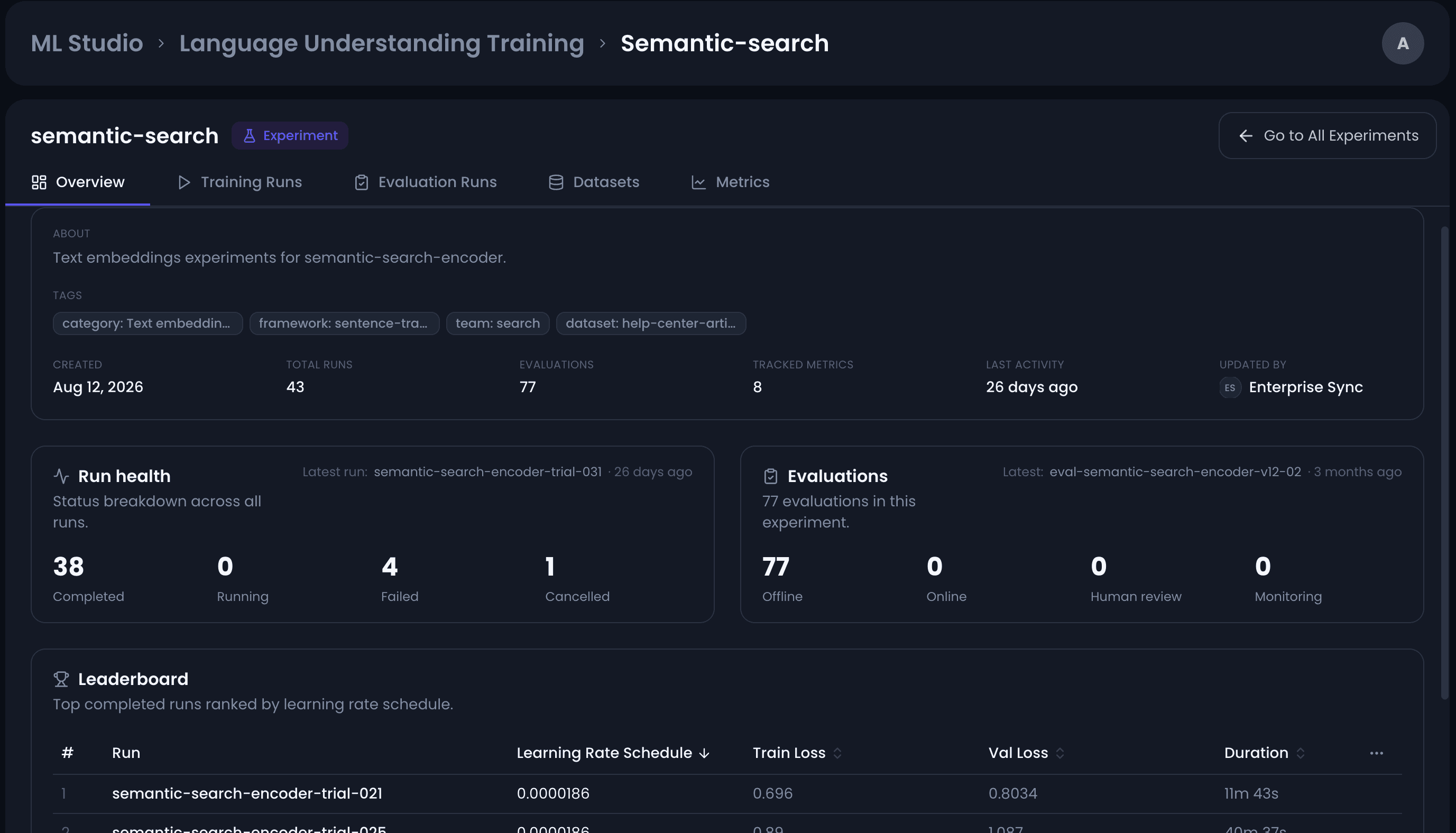
Record training runs and their parameters, metrics, and artifacts.
Model details and versions
Document a model’s purpose, license, and limitations. Keep its versions organized alongside those details.
Evaluation findings
Keep evaluation results with the model they describe, so your team can review the findings.
Frequently asked questions
Still have a question about ML Studio? The docs cover MLflow connections, model sync, and graph relationships in detail.
Read the docsStart with your next model.
Add its details, record your experiments, and keep evaluation results together in ML Studio.