The single source of truthfor every service
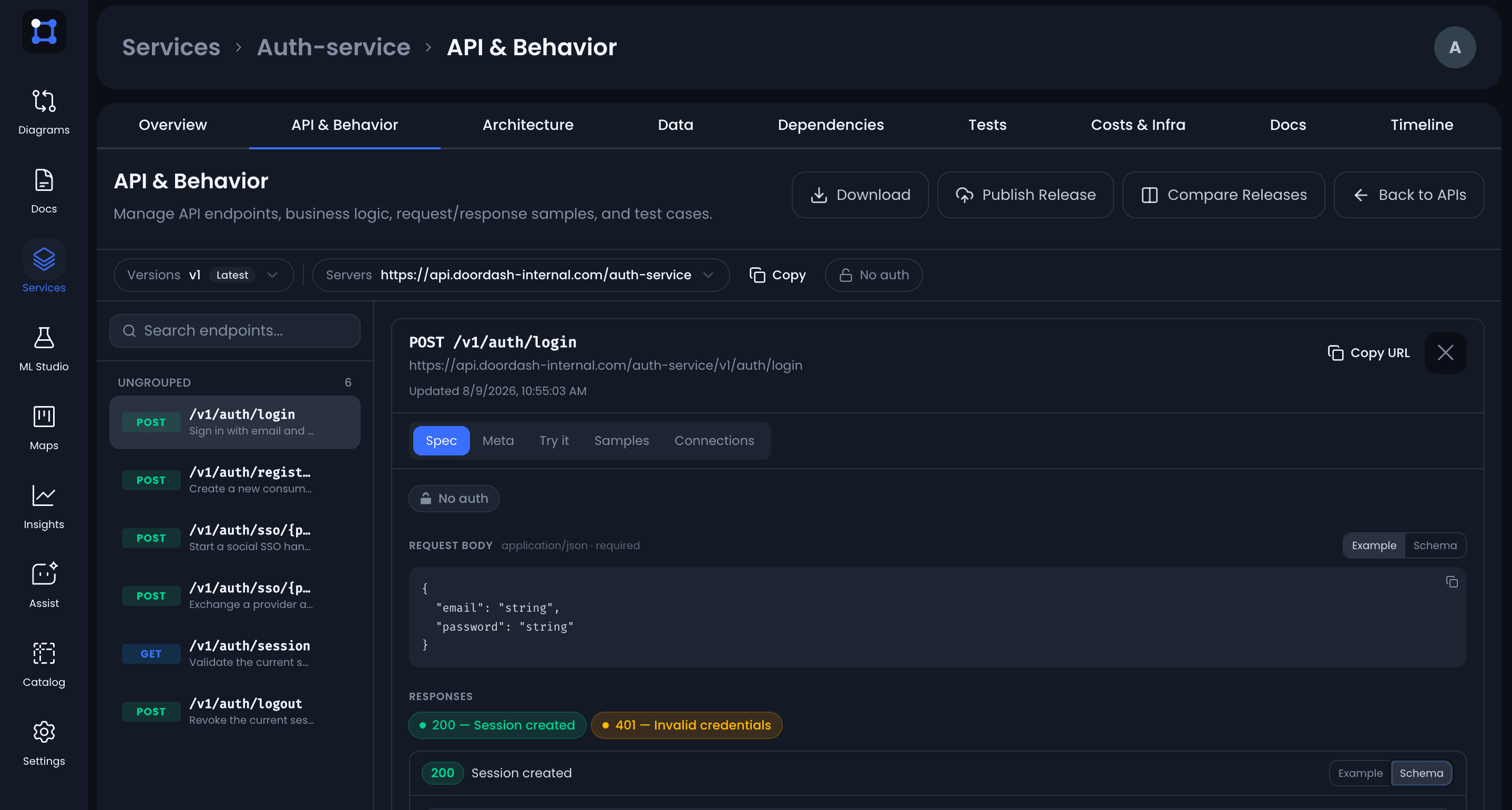
Explore each service’s APIs, architecture, data, tests, and ownership in one place. Follow its dependencies to understand where it fits in your system.
Defined in your repo.
Connected in UIGraph.
Describe your service and reference its existing files in a UIGraph YAML file. Sync using the CLI, or automate updates through your CI/CD pipeline.
service
Know who owns it
Keep the owning team, repository, and contact details with each service.
service:
  name: auth-service
  team: identity-platform
  slack: "#identity-platform"
apis
Explore its APIs
Bring in OpenAPI, GraphQL, or gRPC definitions to browse endpoints and their details.
apis:
  - type: openapi
    path: api/openapi.yaml
  - type: graphql
    path: api/schema.graphql
dependencies
Understand its dependencies
Declare which services it depends on and whether each dependency is required or optional.
dependencies:
  hard: [accounts-service]
  soft: [notifications-service]
Understand each service,
inside and out.
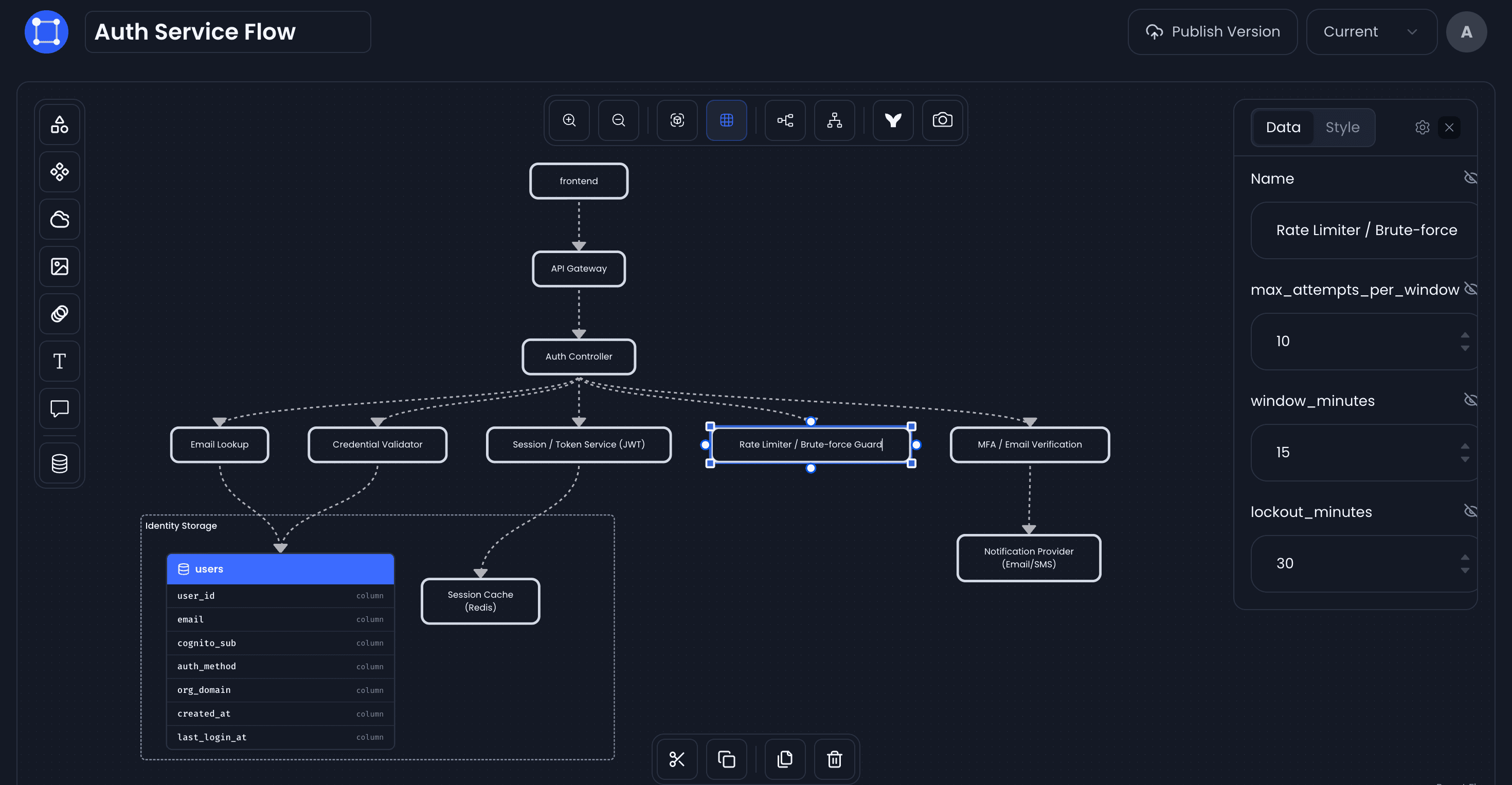
Explore how a service works, the data it uses, and the tests that cover it. Find its documentation and change history alongside those details.
Frequently asked questions
Still have a question about Service Catalog? The documentation covers configuration schemas, CLI commands, and integrations in detail.
Read the docsSee where every service fits.
Explore what a service does, who owns it, and how it connects to the rest of your system.